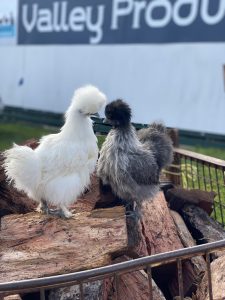

Silkie chickens make great pets for a variety of reasons—both practical and endearing. Here’s why they’re often chosen as companion animals: You will find we have vaccinated pullet silkies at most of our markets throughout the year and unvaccinated silkie day olds in spring and summer. Some fertile eggs also available inn the warmer months.
Silkies are famously calm and gentle. They’re great with children and often enjoy being held, cuddled, and hand-fed. This makes them excellent for families or anyone looking for a tame backyard bird.
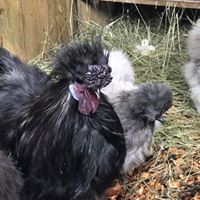
Their fluffy, soft plumage feels more like fur than feathers—hence the name “Silkie.” They also have other quirky traits like black skin and bones, turquoise earlobes, and feathered feet, which make them stand out and endear them to their owners.
Silkies are bantam chickens (smaller than standard breeds), so they’re easier to handle and require less space. This makes them ideal for smaller backyards or urban settings.
Their laid-back nature and low-maintenance needs make them a good choice for first-time chicken keepers. They’re not aggressive, and they’re fairly easy to care for as long as they’re kept clean and dry.
Compared to other breeds, Silkies are relatively quiet. Hens make gentle clucking sounds, and even roosters are usually not as loud as those from larger breeds, which is a bonus in suburban environments.
Silkies are known for going broody (wanting to sit on eggs) and are excellent mothers. Even if you don’t plan to hatch chicks, their motherly nature is heartwarming to watch.
Silkie hens don’t lay as many eggs as more commercial breeds—about 2–4 small eggs per week—which means less waste and lower feed needs. They’re more of a companion than a production animal.
A few considerations:
Because of their fluffy feathers, they’re not waterproof and shouldn’t be exposed to heavy rain or muddy conditions.
They may need extra protection from predators because they can’t fly well and are very docile.
In colder climates, extra care is needed in winter due to their lack of weather-resistant feathers.
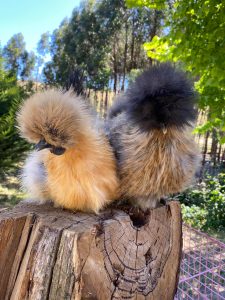
You will find we have them at most of our markets
Cost From June 2025 from $65 each for 16-18 week vaccinated pullets which are supplied and have had their vaccines from a trusted breeder that supplies us with these beautiful silkies that we cann supply those that prefer vaccinated.
Unvaccinated Silkies are available price varies in spring and summer depending on age.
Fertile eggs available in Spring and Summer. P.O.A
YES we have bearded silkies available from time to time vaccinated and not vaccintated. Prices starting from $65
Roosters price according to individual rooster/age etc.
Coop Size: Minimum 3–4 square feet per Silkie inside the coop.
Run Space: About 8–10 square feet per chicken outdoors.
Bedding: Use straw, pine shavings, or hemp. Keep it dry and clean.
Roosts: Lower to the ground—Silkies can’t fly well, so avoid high perches.
Nesting Boxes: One box for every 3–4 hens.
🛡️ Tip: Silkies are vulnerable to predators. Ensure your coop and run are secure with hardware cloth (not chicken wire).
Starter Feed (0–8 weeks): 18–20% protein chick starter.
Grower Feed (8–20 weeks): 16–18% protein grower feed.
Layer Feed (after 20 weeks): 16% protein layer feed + oyster shell for calcium.
Treats & Scraps: In moderation. No junk food, salty, or moldy items.
Grit: Provide insoluble grit if they’re not free-ranging.
Bathing: Optional, but some owners bathe them occasionally due to their fluffy feathers.
Trimming: Keep foot feathers and around the eyes trimmed if needed.
Parasite Prevention: Regular checks for mites and lice; dust baths help prevent infestations.
Vaccinations: Our Vaccinated Silkies have been vaccinated for marecks,I, Newcastle and ILT.
Cold: Silkies can struggle in freezing temps. Use dry bedding, draft-free coops, and supplemental heat only if truly needed.
Heat: Make sure they have shade and plenty of water.